If you are new to Ayurveda, booking your first consultation can bring up a lot of questions.
What will the practitioner ask?
Do you need to know your dosha before you arrive?
Will you receive a diet plan?
Is an Ayurvedic consultation the same as seeing a doctor?
And what happens after the session?
An Ayurvedic consultation is best understood as the starting point for personalized Ayurvedic wellness guidance.
Rather than choosing a therapy simply because you have heard that it is relaxing or beneficial, the consultation allows an Ayurvedic practitioner to understand you as an individual before recommending an appropriate approach.
Here is what you can expect during your first visit.
Key Takeaways
- An Ayurvedic consultation is a one-to-one session with an Ayurvedic practitioner designed to understand your constitution, current lifestyle, routines, digestion, sleep, stress patterns and wellness goals.
- Your first visit may include questions about diet, energy, bowel habits, sleep, work schedule, emotional well-being, menstrual history where relevant, and other day-to-day patterns.
- The practitioner may also use traditional Ayurvedic observations such as pulse, tongue, skin, eyes and body constitution as part of the assessment.
- You may hear terms such as Prakriti and Vikriti. Prakriti refers to your underlying constitution, while Vikriti refers to your current state of imbalance from an Ayurvedic perspective.
- The goal is not to diagnose a medical condition. Instead, the Ayurvedic practitioner uses the consultation to develop personalized wellness recommendations.
- Recommendations may include food guidance, daily routines, sleep practices, yoga or breathing exercises, herbal wellness support where appropriate, and therapies such as Abhyanga, Shirodhara, Nasya or Panchakarma.
- If you are searching for an Ayurvedic consultation near me in Fremont, Sunnyvale, San Jose or the surrounding Bay Area, the first consultation is usually the best place to begin when you are unsure which Ayurvedic service is appropriate.
What Is an Ayurvedic Consultation?
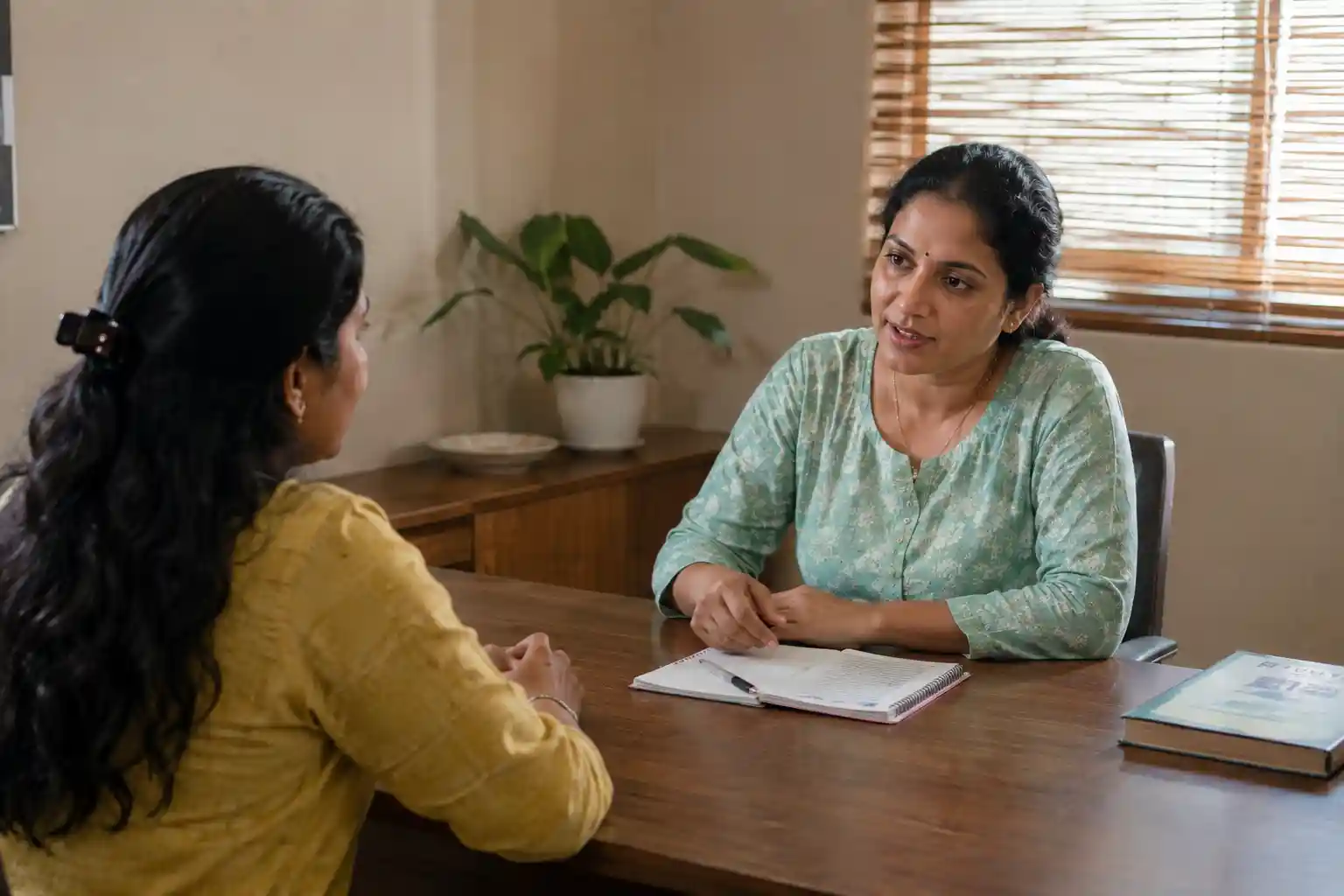
An Ayurvedic consultation is a structured conversation and traditional wellness assessment with an Ayurvedic practitioner.
Ayurveda looks at health through a broader lifestyle framework that may include:
- digestion
- appetite
- sleep
- energy
- stress
- daily routine
- food habits
- movement
- emotional patterns
- seasonal influences
- work schedules
- body constitution
Instead of looking only at one complaint, Ayurveda traditionally considers how different aspects of everyday life may be connected.
This does not mean the practitioner is diagnosing disease.
At a wellness clinic, the purpose of the consultation is to understand your Ayurvedic constitution and current patterns so that suitable lifestyle and therapy recommendations can be discussed.
Why Should You Start With an Ayurvedic Consultation?
Not everyone who visits an Ayurvedic center needs the same therapy.
One person may be primarily looking for relaxation.
Another may want help building a more consistent daily routine.
Someone else may be interested in Panchakarma but may not know whether a full Panchakarma program is appropriate.
Another person may be deciding between Shirodhara, Abhyanga, Nasya, Takradhara or AyurRhythm.
An Ayurvedic consultation helps avoid the one-size-fits-all approach.
The practitioner can first understand your goals and then discuss which Ayurvedic wellness practices may be suitable.
This is particularly helpful if you are searching for an Ayurvedic consultation near me because you want personalized guidance rather than simply booking a spa-style service.
What Happens During Your First Ayurvedic Consultation?
Every practitioner may have a slightly different approach, but a first consultation generally involves several stages.
1. You Discuss Your Main Wellness Goals
The practitioner usually begins by asking why you decided to explore Ayurveda.
You may be looking for support with:
- stress
- sleep routines
- digestion
- energy
- seasonal wellness
- joint or muscle comfort
- hormonal wellness
- daily routine
- lifestyle balance
- relaxation
- general preventive wellness
You do not need to arrive knowing which therapy you want.
In fact, if you are unsure whether you need Shirodhara, Abhyanga, Panchakarma or another Ayurvedic therapy, that is one of the main reasons to begin with a consultation.
2. The Ayurvedic Practitioner Reviews Your Daily Routine
Ayurveda places significant importance on how you live each day.
Your practitioner may ask:
- What time do you wake up?
- What time do you go to sleep?
- Do you wake feeling rested?
- Do you eat meals at regular times?
- What is your work schedule like?
- Do you spend long hours sitting?
- How much physical activity do you get?
- How much time do you spend on screens?
- How often do you travel?
- How stressful is your typical day?
For many Bay Area professionals, irregular meals, long working hours, commuting, late-night screen exposure and high mental workload are common parts of everyday life.
These patterns can become important when creating realistic Ayurvedic wellness recommendations.
3. Your Digestion and Appetite Are Discussed
Digestion is a central concept in Ayurveda.
You may hear the term Agni, which is traditionally used to describe digestive and metabolic capacity.
The Ayurvedic practitioner may ask about:
- appetite
- meal timing
- food preferences
- bloating
- heaviness after eating
- bowel regularity
- food cravings
- thirst
- sensitivity to certain foods
The purpose is to understand patterns rather than diagnose digestive disease.
If you have persistent digestive symptoms or a diagnosed gastrointestinal condition, these should also be discussed with your licensed healthcare provider.
4. The Practitioner Asks About Sleep
Sleep can provide useful information in an Ayurvedic assessment.
Questions may include:
- How quickly do you fall asleep?
- Do you wake during the night?
- What time do you usually sleep?
- Do you wake refreshed?
- Is your mind active at bedtime?
- Do you depend on your phone or television to fall asleep?
Someone who struggles to wind down may receive different wellness recommendations from someone who sleeps for long periods but still wakes feeling heavy or tired.
Depending on the overall assessment, traditional therapies such as Shirodhara or lifestyle practices may sometimes be discussed for supporting relaxation and restful sleep.
5. Stress and Mental Activity Are Considered
Ayurveda traditionally considers mental and emotional patterns as part of the whole-person assessment.
Your practitioner may ask whether you commonly experience:
- overthinking
- irritability
- mental fatigue
- restlessness
- difficulty slowing down
- feeling overwhelmed
- difficulty maintaining routines
This part of the consultation is not a mental-health diagnosis.
If you are experiencing significant anxiety, depression or another mental-health concern, appropriate medical or psychological care remains important.
Ayurvedic wellness practices can be discussed as complementary support rather than a replacement for professional mental-health treatment.
6. Your Health and Lifestyle History May Be Reviewed
The Ayurvedic practitioner may ask about previous health concerns, surgeries, medications, supplements, allergies or other therapies you are currently receiving.
This information matters because Ayurvedic recommendations should not be made in isolation from your broader health situation.
Always tell your practitioner about:
- prescription medications
- pregnancy
- recent surgeries
- chronic health conditions
- allergies
- ongoing medical treatment
- significant changes in health
Ayurveda should complement appropriate healthcare, not replace it.
What Are Prakriti and Vikriti?
Two terms you may hear during an Ayurvedic consultation are Prakriti and Vikriti.
Prakriti
Prakriti refers to your underlying Ayurvedic constitution.
Ayurveda traditionally describes three doshas:
- Vata
- Pitta
- Kapha
Most people are understood as having a combination of all three, with one or two being more prominent.
Prakriti is considered relatively stable and represents your natural constitution.
Vikriti
Vikriti refers to your current state.
Your present patterns may be influenced by:
- season
- diet
- sleep
- work
- stress
- travel
- climate
- age
- daily routine
This distinction is important.
The Ayurvedic practitioner does not simply say, “You are Vata” or “You are Pitta” and give you a generic list from the internet.
Your underlying constitution and your present state may not be the same.
That is one of the reasons a personalized Ayurvedic consultation can be more useful than relying only on an online dosha quiz.
Does the Practitioner Check Your Pulse?
Pulse assessment is one of the traditional observation methods used in Ayurveda.
An Ayurvedic practitioner may gently assess the pulse at the wrist as part of the broader consultation.
Pulse reading should not be confused with a modern medical diagnostic test.
In Ayurveda, it is traditionally used alongside other observations and the detailed history taken during the consultation.
The practitioner may also observe the tongue, skin, eyes, body frame or other visible characteristics.
No single observation is used in isolation.
Do You Need to Know Your Dosha Before the Consultation?
No.
You do not need to take an online test or determine whether you are Vata, Pitta or Kapha before your appointment.
In fact, arriving without trying to self-diagnose can sometimes make the consultation easier.
Online quizzes may be interesting educational tools, but they cannot account for all of the factors an experienced Ayurvedic practitioner considers during an individual consultation.
What Recommendations Might You Receive?
Your recommendations depend on your goals and the practitioner’s assessment.
They may include guidance related to:
Food and Meal Patterns
Rather than creating an extremely restrictive diet, the practitioner may suggest practical adjustments involving:
- meal timing
- food preparation
- seasonal foods
- meal size
- eating habits
- foods traditionally considered more balancing for your current state
The goal should be a realistic routine you can actually maintain.
Daily Routine
Ayurveda places great importance on Dinacharya, or daily routine.
Recommendations may involve:
- regular waking and sleeping times
- morning routines
- mealtimes
- movement
- self-massage
- breathing practices
- evening routines
Yoga and Breathing Practices
Yoga or breathing practices may be recommended to complement your wellness plan.
The focus may vary depending on whether you are looking for grounding, gentle movement, relaxation or greater routine consistency.
Ayurvedic Therapies
Depending on your needs, the practitioner may discuss therapies such as:
- Abhyanga
- Abhyanga & Swedana
- Shirodhara
- Shiroabhyanga
- Nasya
- Kati Basti
- Netra Basti
- Marma Chikitsa
- Takradhara
- Panchakarma
Each therapy has a different traditional purpose and should not simply be selected because it is popular.
Longer-Term Lifestyle Support
For people who need more structured lifestyle guidance, the practitioner may recommend a longer wellness program such as AyurRhythm.
This type of program may be useful when the challenge is not knowing what to do, but consistently implementing food, sleep, movement and routine changes over time.
Is an Ayurvedic Consultation the Same as Medical Diagnosis?
No.
This distinction is important, particularly in the United States.
An Ayurvedic practitioner working within a wellness setting does not replace your physician and should not present the consultation as medical diagnosis or treatment.
Ayurvedic consultation may help you understand traditional Ayurvedic concepts related to constitution, diet, routine and wellness.
If you have symptoms that require medical evaluation, you should consult an appropriate licensed healthcare professional.
Ayurvedic wellness guidance can then be used alongside appropriate medical care when suitable.
What Should You Bring to Your First Ayurvedic Consultation?
You generally do not need to bring much.
However, it may be helpful to have:
- a list of current medications
- supplements you regularly take
- information about major health conditions
- recent significant medical history
- questions you want to ask
- your main wellness goals
You may also want to think about your typical:
- breakfast
- lunch
- dinner
- sleep schedule
- bowel routine
- exercise
- stress level
- working hours
You do not need to prepare perfect answers.
The consultation is meant to be a conversation.
What Questions Should You Ask Your Ayurvedic Practitioner?
Your first visit is also an opportunity for you to evaluate the practitioner.
Consider asking:
- What are your Ayurvedic qualifications?
- How do you determine which therapies are suitable?
- Will I receive personalized recommendations?
- Do I need a consultation before a therapy?
- How often will my plan be reviewed?
- Are the recommendations intended to complement my current medical care?
- Which Ayurvedic therapy is most appropriate for my current wellness goals?
- What should I realistically expect from the program?
A good practitioner should be comfortable explaining both the traditional reasoning behind Ayurveda and the limits of Ayurvedic wellness practice.
Ayurvedic Consultation vs Booking a Therapy Directly
If you simply want to experience a relaxation-focused therapy and already know what you want, you may not always need a detailed consultation first.
However, consultation is especially useful when:
- you have several wellness goals
- you do not know which therapy to select
- you are considering Panchakarma
- you want individualized food and lifestyle guidance
- you are interested in a longer program
- you are receiving other healthcare
- you have questions about your dosha or Ayurvedic constitution
For example, someone searching for Shirodhara treatment may be able to book that specific experience, while someone asking which therapy would be most suitable for stress, sleep and lifestyle imbalance may benefit from an Ayurvedic consultation first.
How Does an Ayurvedic Consultation Lead to Panchakarma?
A full Panchakarma program should not be approached like booking a single massage.
Panchakarma is a structured Ayurvedic process that may involve preparation, specific traditional therapies, diet and post-program guidance.
An Ayurvedic consultation helps the practitioner assess whether Panchakarma is appropriate and, if so, how the program should be structured for the individual.
This may include discussion of therapies such as Panchakarma Virechana or other wellness practices available at the clinic.
If you are researching Panchakarma in the Bay Area, consultation is one of the most important steps before deciding whether to begin a program.
How Long Does It Take to See Results From Ayurveda?
There is no universal timeframe.
Ayurveda is not a quick-fix system, and responsible practitioners should not promise that a particular symptom will disappear after a fixed number of days.
Some recommendations, such as improving meal timing or establishing a better bedtime routine, may feel beneficial relatively quickly.
Other lifestyle patterns take longer to change.
The goal is usually to build sustainable routines and choose wellness practices that can be maintained over time.
Why Personalized Ayurveda Matters
There is now an enormous amount of Ayurvedic information online.
You can easily find lists such as:
“Best foods for Vata.”
“Best morning routine for Pitta.”
“Herbs for Kapha.”
But Ayurveda has traditionally emphasized individual assessment.
Two people searching for the same wellness concern may have:
- different constitutions
- different lifestyles
- different sleep patterns
- different digestion
- different seasons affecting them
- different stress levels
That is why practitioner guidance remains valuable.
The purpose of an Ayurvedic consultation is not simply to give you more information. It is to help organize that information into a practical plan that makes sense for your life.
Ayurvedic Consultation Near Me in the Bay Area
If you are searching for an Ayurvedic consultation near me, location matters, but practitioner-led care matters even more.
Ayurhitam supports clients from Fremont, Sunnyvale, San Jose, Milpitas, Newark, Union City, Hayward, Palo Alto and surrounding Bay Area communities.
Your consultation can help determine whether your next step should focus on lifestyle guidance, an individual Ayurvedic therapy or a more structured program.
Wellness disclaimer: Ayurvedic services and information provided by Ayurhitam are intended for wellness and educational purposes only. They are not intended to diagnose, treat, cure or prevent disease and are not a substitute for care from a licensed physician or other qualified healthcare professional. Statements regarding Ayurvedic practices have not been evaluated by the U.S. Food and Drug Administration. Consult your healthcare provider if you have a medical condition, take prescription medication, are pregnant or have concerns about your health.
Frequently Asked Questions
An Ayurvedic practitioner discusses your diet, digestion, sleep, daily routine, stress, energy and wellness goals. Traditional Ayurvedic observations such as pulse and tongue assessment may also be used to understand your constitution and current patterns.
No. You do not need to determine your dosha before attending an Ayurvedic consultation. The practitioner can assess your constitution and current state as part of the session.
No. Ayurvedic consultation at a wellness clinic is not a substitute for diagnosis or treatment from a licensed healthcare professional. It is intended to provide traditional Ayurvedic wellness and lifestyle guidance.
Recommendations may include food and meal guidance, daily routines, yoga or breathing practices, lifestyle changes and appropriate Ayurvedic therapies such as Abhyanga, Shirodhara, Nasya or Panchakarma.
Yes, practitioner assessment is particularly important before beginning a structured Panchakarma program. It allows the Ayurvedic practitioner to understand your individual situation and determine whether Panchakarma is appropriate.
Look for an experienced Ayurvedic practitioner who clearly explains their qualifications, follows appropriate wellness scope, provides personalized guidance and does not make unrealistic promises about curing medical conditions.
Start Your Ayurvedic Journey With a Practitioner
If you are not sure which Ayurvedic therapy is right for you, an Ayurvedic consultation is the best place to start.
Rather than choosing a treatment based only on an online description, you can discuss your lifestyle, routines and wellness goals directly with an Ayurvedic practitioner and understand which next steps may be most appropriate.
Ayurhitam offers practitioner-led Ayurvedic wellness support for clients across Fremont, Sunnyvale, San Jose and the wider Bay Area.
Schedule your Ayurvedic consultation with Ayurhitam and begin with a personalized approach to your wellness journey.