
If you are researching Shirodhara cost, you are probably already interested in the therapy and want to understand what you are paying for before booking a session.
At Ayurhitam, Shirodhara is more than simply pouring warm oil over the forehead. The therapy is performed within an Ayurvedic wellness framework, with attention to your individual needs, comfort and the traditional principles behind the practice.
A 60-minute Shirodhara treatment at Ayurhitam currently costs $150.
But what happens during those 60 minutes? Why do people choose Shirodhara? What does the therapy feel like? And why should it be performed by an Ayurvedic practitioner?
Here is what you should know before scheduling a session.
Key Takeaways
- At Ayurhitam, a 60-minute Shirodhara session is currently priced at $150.
- Shirodhara is a traditional Ayurvedic therapy in which a continuous stream of warm oil is gently poured over the forehead.
- The experience is known for its deeply relaxing feeling and is traditionally chosen to support mental calm, relaxation and restful sleep.
- People often explore Shirodhara when they are dealing with stress, mental restlessness, difficulty unwinding or disrupted sleep.
- In traditional yogic and Ayurvedic philosophy, the forehead area is associated with the Ajna or “third eye” center. Some people describe the quiet, inward state experienced during Shirodhara as a sense of greater awareness or connection.
- Shirodhara should be performed under the guidance of a certified Ayurvedic practitioner who can determine whether the therapy is appropriate and select the oil or liquid used for the session.
- Shirodhara is an Ayurvedic wellness therapy. It should not be used as a replacement for medical care for anxiety, insomnia or any other diagnosed condition.
What Is Shirodhara?
Shirodhara is one of the best-known therapies in Ayurveda.
The word comes from two Sanskrit terms:
Shiro means head.
Dhara means continuous flow.
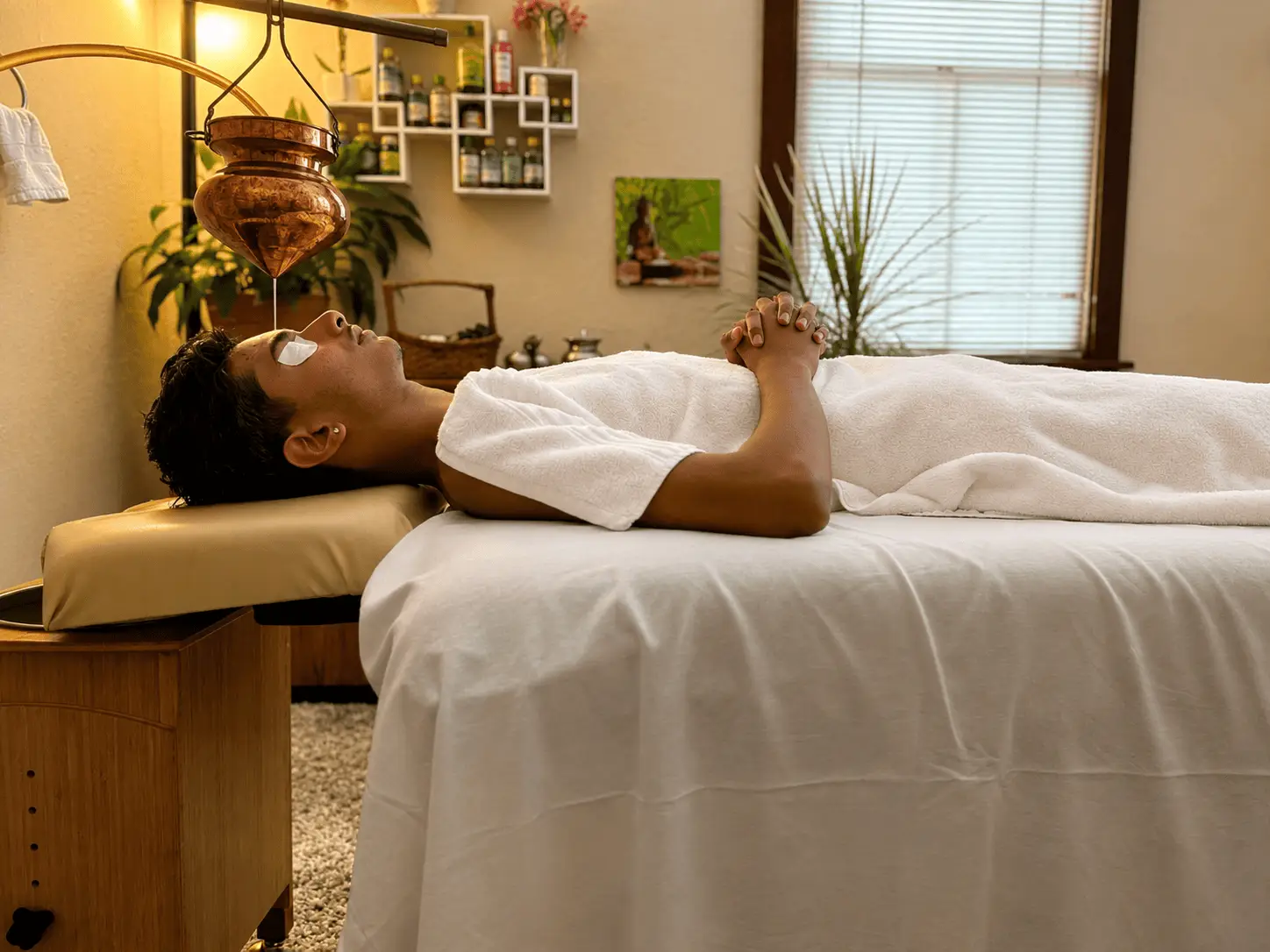
During a traditional Shirodhara treatment, a gentle and continuous stream of warm oil or another practitioner-selected liquid is directed over the forehead while you rest comfortably on an Ayurvedic therapy table.
The flow is slow, rhythmic and controlled.
Unlike a conventional head massage, Shirodhara does not rely primarily on manual pressure. Much of the experience comes from the warmth, rhythm and repetition of the flowing oil.
People frequently describe the session as quiet, deeply calming and unlike an ordinary massage experience.
At Ayurhitam, Shirodhara is performed by an Ayurvedic practitioner rather than offered simply as a spa add-on. The practitioner considers the person’s needs and Ayurvedic constitution when deciding how the therapy should be approached.
If you want to understand the therapy itself in greater depth, our Shirodhara Treatment page explains the traditional process, oils and Ayurvedic principles associated with the practice.
Why Is Shirodhara So Relaxing?
One of the most common reasons people become interested in Shirodhara is the distinctive relaxing feeling produced by the continuous flow of warm oil.
Modern life rarely gives the mind an opportunity to become completely quiet.
Work notifications, screens, deadlines, commuting, family responsibilities and constant mental stimulation can make it difficult to shift out of an alert state.
Shirodhara creates a very different environment.
You lie still.
The room is quiet.
The oil is warm.
The flow over the forehead is steady and repetitive.
There is nothing you need to do or achieve during the session.
Many people describe gradually becoming less aware of outside distractions and entering an unusually restful state.
From an Ayurvedic perspective, Shirodhara is traditionally used when the mind feels excessively active, restless or unsettled, particularly when Vata qualities such as movement, irregularity and overactivity are prominent.
This is one reason Shirodhara is frequently associated with relaxation, stress support and sleep-related wellness.
What Are the Benefits of Shirodhara Treatment?
People search for Shirodhara benefits for many different reasons. It is important, however, to distinguish between traditional Ayurvedic uses and medical treatment claims.
Shirodhara is not a medical treatment for anxiety, insomnia, migraines, depression or neurological disorders.
Within Ayurvedic wellness practice, however, it has traditionally been selected to support several aspects of mental and physical well-being.
Supports Deep Relaxation: Deep relaxation is probably the experience most strongly associated with Shirodhara.
The combination of warmth, stillness and rhythmic oil flow can create an environment in which many people find it easier to mentally slow down.
For people whose everyday routine involves long hours at a computer, demanding professional schedules or constant multitasking, simply entering this deeply restful state may be one of the most appreciated parts of the therapy.
Supports a Calm and Settled Mind: Shirodhara is often chosen by people who describe themselves as mentally busy, overstimulated or unable to switch off.
In Ayurvedic terms, these experiences may be considered while assessing Vata and Pitta patterns.
The therapy is traditionally used to encourage a sense of grounding, quietness and mental ease.
May Support Restful Sleep: Shirodhara has a long traditional association with sleep and relaxation.
People sometimes search online for phrases such as Shirodhara for insomnia or ask whether Shirodhara “relieves insomnia.”
The more accurate way to describe its role is that Shirodhara may be incorporated into an Ayurvedic wellness plan designed to support relaxation and healthier sleep routines.
It does not diagnose or treat insomnia.
Persistent insomnia can have many causes, and anyone experiencing ongoing sleep problems should discuss them with an appropriate medical professional.
For people interested in the Ayurvedic approach to rest and mental calm, Shirodhara may also be explored alongside other lifestyle recommendations through our Mind, Stress & Sleep wellness category.
May Help Create an Anti-Anxiety Relaxation Experience: Shirodhara is also sometimes described online as an “anti-anxiety” therapy.
That terminology needs context.
Shirodhara is not an anti-anxiety medical treatment, and it should not replace professional mental-health care or prescribed medication.
What many people value is the deeply relaxing environment created by the therapy.
Someone experiencing everyday stress, tension or mental restlessness may choose Shirodhara as part of a broader wellness routine intended to support calm and relaxation.
If you have an anxiety disorder or significant anxiety symptoms, speak with your healthcare provider and let your Ayurvedic practitioner know about your health history before beginning any wellness therapy.
Encourages Time for Mental Stillness: One overlooked benefit of traditional therapies such as Shirodhara is that they intentionally create space for stillness.
For 60 minutes, there are no phones, meetings, emails or decisions.
For some people, that uninterrupted period of rest becomes an important part of their overall wellness routine.
Shirodhara and the Third Eye: What Does Ayurveda Say?
Shirodhara is frequently connected with the idea of the third eye because the flow of oil is directed toward the forehead.
In yogic philosophy, the area between the eyebrows is associated with Ajna, commonly referred to as the third-eye center.
Ajna is traditionally connected with awareness, intuition, clarity and inward attention.
Because Shirodhara creates prolonged stimulation and awareness around the forehead while the person rests quietly, some people describe the experience in spiritual terms, including a feeling of inner stillness, heightened awareness or “opening the third eye.”
This should be understood as a traditional and spiritual interpretation, not as a scientifically established physiological effect of Shirodhara.
Not everyone experiences Shirodhara spiritually.
Some people simply feel deeply relaxed. Others may become sleepy. Some experience a meditative state. The experience can vary from person to person.
There is no particular sensation that you are required to experience for the therapy to be meaningful.
How Is Shirodhara Done?
A Shirodhara session follows a carefully controlled process.
1. Practitioner Review
Before the therapy begins, the Ayurvedic practitioner considers your current needs, wellness goals and relevant health information.
If you are new to Ayurveda or have more complex concerns, an Initial Ayurvedic Consultation may be recommended before beginning a broader Ayurvedic program.
2. Preparation for the Therapy
You are positioned comfortably on the therapy table.
The practitioner prepares the Shirodhara equipment and the oil or other appropriate liquid used for the session.
Comfort is important because the person receiving Shirodhara needs to remain relaxed while the flow continues.
3. Warm Oil Is Prepared
The oil is maintained at a comfortable temperature.
Different Ayurvedic oils may traditionally be selected depending on the person’s needs and the practitioner’s assessment.
Oil selection is one reason Shirodhara should not be viewed as a one-size-fits-all spa procedure.
4. The Continuous Flow Begins
The warm oil flows in a controlled stream over the forehead.
The stream may gently move across the forehead in a rhythmic manner.
The repetitive sensation is one of the defining characteristics of Shirodhara and contributes to the relaxing experience people commonly associate with the therapy.
5. You Rest During the Therapy
During the session, you simply rest.
Some people remain awake throughout the treatment.
Others enter a deeply relaxed or meditative state.
It is also common for people to feel sleepy as they become more comfortable.
6. The Practitioner Completes the Session
Once the Shirodhara portion is complete, the practitioner concludes the therapy and provides appropriate aftercare guidance.
Depending on your individual situation, you may be advised to rest, avoid excessive stimulation for a period of time or follow other simple wellness recommendations.
How Much Does Shirodhara Cost?
At Ayurhitam, the current Shirodhara price is $150 for a 60-minute session.
When comparing Shirodhara cost between Ayurvedic centers, it is useful to look beyond the number alone.
Ask:
- How long is the session?
- Is the therapy performed or supervised by a qualified Ayurvedic practitioner?
- Is the oil selected appropriately?
- Is the session individualized?
- Is there practitioner guidance when necessary?
- Is the service being offered as authentic Ayurvedic therapy or simply as a spa experience?
A lower Shirodhara price does not necessarily represent the same type of service.
At Ayurhitam, Shirodhara is offered within a practitioner-led Ayurvedic wellness setting.
What Is Included in the $150 Shirodhara Session?
The $150 Shirodhara session currently includes approximately 60 minutes devoted to the therapy and the practitioner-led process surrounding it.
The experience includes:
- Preparation for the Shirodhara therapy
- Practitioner-selected approach based on your needs
- Preparation of the warm oil
- Controlled continuous flow over the forehead
- Time to rest during the therapy
- Practitioner supervision throughout the process
- Basic post-session guidance when appropriate
If a separate Ayurvedic consultation is needed to assess broader wellness concerns, that consultation may be booked separately.
Is Shirodhara the Same as Shiroabhyanga?
No.
Although both therapies focus around the head, they are different Ayurvedic practices.
Shirodhara involves a continuous stream of warm oil over the forehead.
Shiroabhyanga is an Ayurvedic head and scalp massage using warm herbal oil.
Someone primarily interested in head and scalp massage may prefer Shiroabhyanga, while someone seeking the characteristic deeply restful experience of flowing warm oil may be more interested in Shirodhara.
Your Ayurvedic practitioner can help you understand which option is more appropriate for your wellness goals
Shirodhara vs Takradhara
Another therapy visitors sometimes encounter is Takradhara.
The two therapies share the concept of a continuous flowing liquid, but they are not identical.
Shirodhara commonly uses warm oil directed around the forehead and head region.
Takradhara traditionally uses a practitioner-prepared buttermilk-based liquid and is selected according to different Ayurvedic considerations.
The appropriate therapy should be chosen with guidance from an Ayurvedic practitioner rather than simply according to which treatment sounds more relaxing.
Who May Consider Shirodhara?
People commonly explore Shirodhara when they are looking for:
- A deeply relaxing Ayurvedic wellness experience
- Support for managing everyday stress
- A quieter mental state
- Support for restful sleep habits
- Time away from constant stimulation
- Traditional Ayurvedic support for Vata or Pitta-related imbalance
- A meditative or inward-focused wellness experience
Shirodhara is not appropriate for every person or every situation.
Your practitioner should know about relevant medical conditions, medications, pregnancy and any other information that may affect whether the therapy is appropriate.
How Often Should You Get Shirodhara?
There is no universal schedule that works for everyone.
Some people experience Shirodhara as an occasional wellness therapy.
Others may receive a series of sessions as part of a practitioner-guided Ayurvedic wellness program.
Frequency can depend on:
- Your Ayurvedic constitution
- Your current state of balance
- Your wellness goals
- The season
- Other therapies you are receiving
- Your practitioner’s recommendations
This is another reason to work with an Ayurvedic practitioner rather than deciding on a fixed treatment schedule based only on information found online.
What Should You Expect After Shirodhara?
Immediately after the session, many people prefer to remain in a calm environment rather than rushing back into an intense schedule.
You may feel deeply relaxed or sleepy.
Your hair and scalp may also contain oil after the therapy, so it is useful to plan accordingly.
If possible, avoid scheduling a demanding meeting or strenuous activity immediately afterward.
Your practitioner may provide additional guidance depending on how the therapy was performed and your individual situation.
Is Shirodhara Worth the Cost?
Whether a $150 Shirodhara treatment is worthwhile depends on what you are looking for.
If your goal is simply to receive a conventional massage, another service may be more suitable.
If you specifically want to experience an authentic Ayurvedic therapy involving a continuous flow of warm oil, individualized practitioner guidance and a deeply restful environment, Shirodhara offers a very different experience.
The value is not simply in the oil.
It is in the complete experience, including the practitioner, preparation, traditional methodology, controlled application and time intentionally devoted to relaxation.
Important wellness disclaimer: Ayurvedic services offered by Ayurhitam are intended for wellness and educational purposes and are not a substitute for diagnosis or treatment by a licensed medical professional. Statements regarding Ayurvedic practices have not been evaluated by the U.S. Food and Drug Administration. If you have a medical or mental-health condition, are pregnant, take medication or are receiving medical treatment, consult your physician or qualified healthcare professional before beginning a new wellness practice.
Frequently Asked Questions
No. Shirodhara is not a medical treatment for anxiety disorders. It is traditionally used in Ayurveda to support relaxation and mental calm. People experiencing anxiety should continue to work with an appropriate healthcare or mental-health professional.
Shirodhara should not be presented as a cure or treatment for insomnia. Because the therapy promotes a deeply relaxing environment, it is often chosen by people seeking Ayurvedic support for better rest and sleep routines. Persistent insomnia should be discussed with a healthcare provider.
A 60-minute Shirodhara session at Ayurhitam is currently priced at $150.
The Shirodhara session currently offered at Ayurhitam is approximately 60 minutes.
The forehead area is associated with the Ajna or third-eye center in yogic philosophy. Some people describe Shirodhara as creating greater inward awareness or meditative stillness. “Opening the third eye” is a spiritual interpretation rather than a medically established effect of the therapy.
Shirodhara is performed within a practitioner-led Ayurvedic wellness setting. A certified Ayurvedic practitioner considers the person’s individual needs and determines how the therapy should be approached.
Not everyone requires a full consultation before an individual wellness session. However, if you have ongoing health concerns, are unsure which Ayurvedic therapy is appropriate, or want a more individualized wellness plan, an Ayurvedic consultation may be recommended first.
Ready to Experience Shirodhara?
If you have been searching for Shirodhara treatment in the Bay Area, want to understand whether the therapy is appropriate for you, or simply want to experience the deeply relaxing feeling associated with traditional Shirodhara, speak with our Ayurvedic practitioner.
Ayurhitam offers practitioner-led Ayurvedic wellness services for clients in Fremont, Sunnyvale, San Jose, Milpitas, Newark, Union City, Hayward, Palo Alto and surrounding Bay Area communities.
Explore our Shirodhara Treatment or schedule your session with Ayurhitam today.