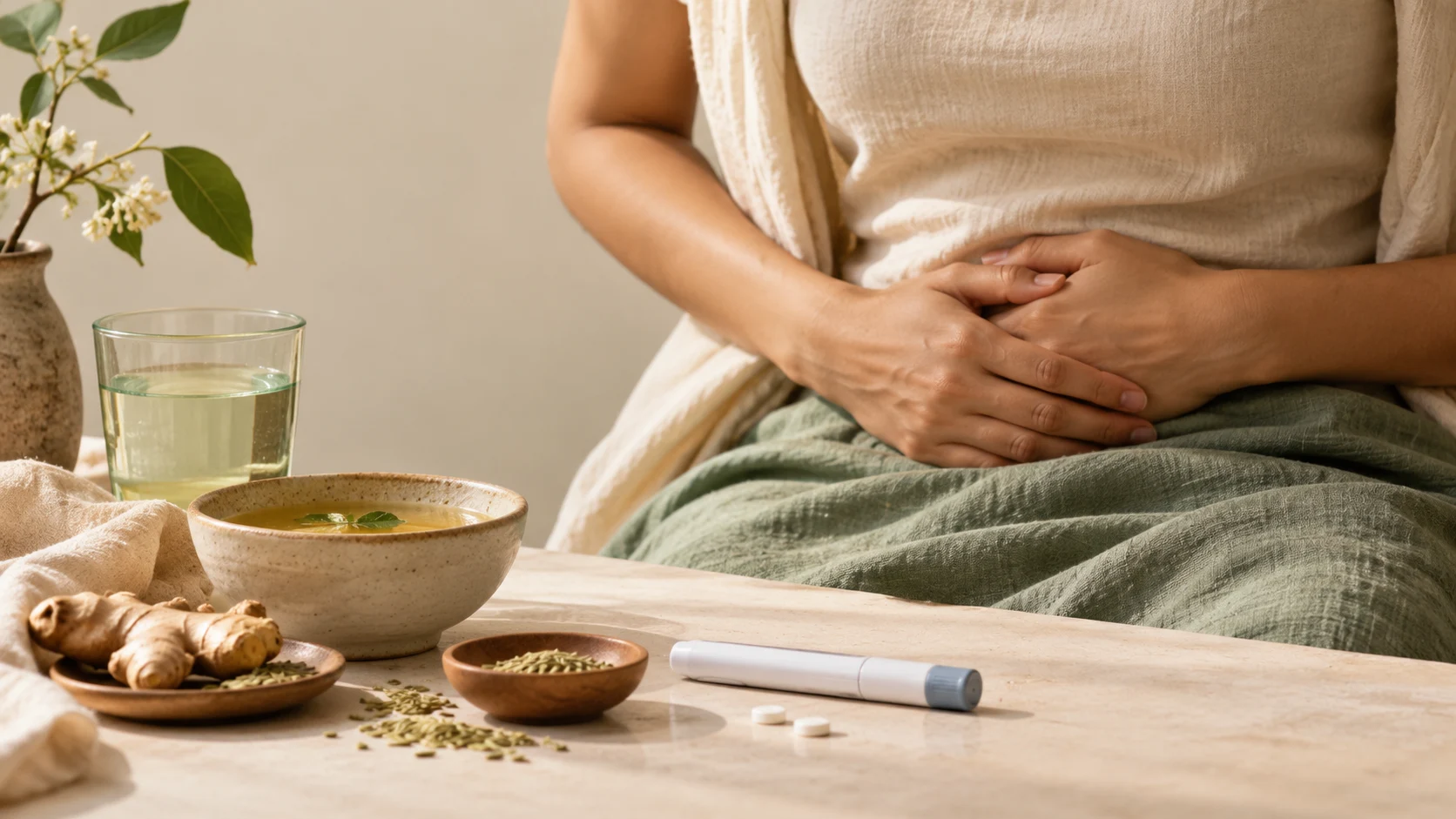
You started a GLP-1 weight loss medication to lose weight, manage type 2 diabetes, or address insulin resistance. The medication is working. The scale is moving. Your cravings are quieter. But something is off. Your digestion feels sluggish in a way it never did before. You are tired in a way that food used to help with. You feel colder. Your hair has started shedding. You cannot remember the last time you had a satisfying bowel movement. You are losing weight, but you also feel like you are losing something you cannot quite name.
This is not in your head. GLP-1 medications produce real, measurable, often significant side effects that go beyond the “you’ll feel some nausea at first” line in the prescribing information. Many of these side effects are predictable from an Ayurvedic view of what the medication is doing to the body. And many of them can be supported, with care, through a thoughtful Ayurvedic protocol delivered alongside your medical treatment.
This is not an anti-GLP-1 article. These medications genuinely help many people, and the metabolic benefits for people with type 2 diabetes and clinically significant obesity are real. This is an article about how to protect your digestion, your energy, your muscle mass, and your long-term vitality while you are on them, and after.
Key Takeaways
- GLP-1 receptor agonist medications work by slowing digestion and suppressing appetite. These are also the exact mechanisms that cause the most common side effects.
- From an Ayurvedic view, GLP-1 drugs significantly suppress Agni (digestive fire) and disrupt Apana Vayu (the downward-moving force that governs elimination). This explains the chronic nausea, constipation, and fatigue many users experience.
- The muscle loss that studies show accompanies rapid GLP-1 weight loss is a tissue depletion concern (Dhatu Kshaya in Ayurvedic terms), not just a cosmetic one.
- Ayurveda offers complementary support for the specific side effect profile: dietary adjustment to work with suppressed digestion, herbs to support elimination, Abhyanga to maintain muscle and tissue tone, and sometimes Panchakarma after discontinuation.
- This is complementary care alongside medical treatment, not a replacement. Please continue to work with your prescribing physician.
What GLP-1 Medications Do (And Why the Side Effects Follow)
GLP-1 receptor agonists are a class of medications that mimic a gut hormone called glucagon-like peptide-1. They work through several mechanisms:
- Slow gastric emptying: Food stays in the stomach significantly longer. You feel full faster and stay full longer.
- Suppress appetite signals: The hunger drive is dampened at the brain level.
- Improve insulin response: Blood sugar regulation becomes more efficient.
- Reduce food reward response: The pleasure signal from eating is quieter.
These are the signs medication is working as intended. But they are also the exact mechanisms behind the side effects. Food sitting in the stomach for hours longer than normal is why nausea is the most common side effect. Suppressed appetite means many users undereat protein and fibre to the point of muscle loss and constipation. Reduced food reward is why some users describe a general flattening of mood or enjoyment.
The Ayurvedic View: Suppressed Agni and Disrupted Apana
In Ayurveda, two concepts help explain what is actually happening on a GLP-1 medication:
Agni is the digestive fire. It is responsible for breaking down food, extracting nutrients, converting food into tissue, and clearing metabolic waste. When Agni is strong, digestion is efficient, elimination is regular, energy is stable, and tissues are nourished. When Agni is suppressed (which GLP-1 medications do significantly), food sits undigested, nutrients are poorly absorbed, waste accumulates, and the body gradually depletes.
Apana Vayu is the downward-moving sub-type of Vata dosha. It governs the proper downward flow of elimination (bowel movements, menstruation, urination). When Apana is disrupted, constipation, menstrual irregularity, and a general sense of “stuck” in the lower body follow. GLP-1 medications slow gut motility, which from an Ayurvedic view is a direct disruption of Apana Vayu.
These two mechanisms together explain the pattern that so many GLP-1 users describe but struggle to name: digestion that works slowly, elimination that is incomplete, energy that is lower than expected, hair that is shedding, muscle that is softening, and a vague sense that the body is not being nourished even when nutrition on paper looks adequate.
The Side Effects Ayurveda Can Support
1. Chronic Nausea and Delayed Gastric Emptying
Ayurvedic dietary adjustments can meaningfully reduce the burden on a slowed digestive system. Smaller, warmer, lighter meals eaten more frequently are easier to process than larger meals. Spices like ginger, cumin, cardamom, and fennel support Agni without overwhelming it. Avoiding cold foods, raw salads, and heavy dairy during a GLP-1 course is often transformative.
2. Constipation
Constipation on GLP-1 medications is a direct result of slowed gut motility (disrupted Apana Vayu). Ayurvedic support includes warm sesame oil self-massage over the abdomen, warm water with ginger first thing in the morning, specific herbal supports that encourage downward movement without creating dependency, and dietary emphasis on cooked warm foods and healthy fats. For stubborn constipation, specific Ayurvedic herbal formulations prescribed by a certified practitioner can restore natural rhythm.
3. Muscle Loss and Tissue Depletion
This is the side effect most GLP-1 patients are least aware of. Studies show rapid weight loss on these medications often includes significant lean muscle mass alongside fat. From an Ayurvedic view, this is Dhatu Kshaya (tissue depletion), and it is one of the serious long-term concerns. Weekly Abhyanga sessions support muscle and tissue tone, improve circulation, and nourish depleted dhatus. Dietary emphasis on quality protein, ghee, and tissue-building foods (asparagus, almonds, dates) is essential. For significant tissue depletion, Shashtik Shali Pinda Sweda is one of the classical Ayurvedic therapies for tissue rejuvenation.
4. Fatigue and Low Energy
The combination of reduced caloric intake, poor nutrient absorption from suppressed Agni, and tissue depletion creates a specific kind of fatigue that does not resolve with sleep. Ayurvedic protocols for this fatigue focus on rebuilding Agni, nourishing the depleted tissues, and supporting Ojas (vital essence). Herbal Rasayana (rejuvenation) formulations are often central.
5. Hair Shedding
Hair fall on GLP-1 medications is typically rooted in two things: nutritional depletion (particularly protein and healthy fats) and the Vata aggravation that accompanies rapid weight loss. Ayurvedic support includes dietary rebuilding, warm oil scalp massage with Bhringaraj oil, and sometimes clinical Shiroabhyanga or Shirodhara to settle the nervous system Vata.
6. Dry Skin, Cold Hands and Feet, Mental Scatter
All classic Vata aggravation signs. The combination of restricted eating, altered metabolism, and tissue depletion aggravates Vata. The Ayurvedic Vata-pacifying protocol for example: Abhyanga or usage of warm oil, warm cooked meals, consistent rhythm, grounding movement) is directly applicable.
What About After You Stop GLP-1 Medications?
Many patients eventually discontinue GLP-1 medications, either because they have reached their goal, cannot tolerate the side effects, or face insurance or cost barriers. Weight regain is common after discontinuation, often in a different pattern than before (less lean muscle, more fat). This is where Panchakarma becomes a serious consideration. A classical Panchakarma program can clear accumulated metabolic imbalance, restore Agni, rebuild tissues, and set the foundation for sustained post-medication health.
A complete Panchakarma must be performed under the direct supervision of a certified Ayurvedic practitioner or Ayurvedic doctor. It cannot be done at home. The specific procedures within Panchakarma are selected based on where toxins (ama) have accumulated in your body and which doshas are involved. This is why personalisation and practitioner supervision are essential, not optional. Panchakarma is also appropriate during a GLP-1 course in some cases, but this must be assessed carefully because the suppressed Agni of active GLP-1 use affects what preparation phase is appropriate.
A Note on Working With Your Medical Team
Ayurvedic support for GLP-1 side effects works best when it is coordinated with your prescribing physician. Please share with both your doctor and your Ayurvedic practitioner what you are taking, what dose, how long you have been on it, and what side effects you are experiencing. Ayurveda is complementary care in this context, not a replacement for medical treatment. Do not stop or change your prescription without medical guidance.
Wellness Disclaimer: Ayurhitam is an Ayurvedic wellness center with locations in Fremont and Sunnyvale, California. The information in this article is for general education and is not a substitute for medical care, diagnosis, or advice from a licensed physician. Statements have not been evaluated by the FDA. Please consult your medical doctor before beginning any Ayurvedic wellness program, and before making any changes to prescribed medications.
Frequently Asked Questions
Yes. Ayurveda is complementary to your medical treatment and can meaningfully support the specific side effects (constipation, nausea, muscle loss, fatigue, hair shedding, dry skin) that often accompany GLP-1 medications. Please share your current medications and dosage with your Ayurvedic practitioner during consultation so the protocol can be designed to work alongside your medical plan.
From an Ayurvedic view, GLP-1 medications significantly suppress Agni (digestive fire) and disrupt Apana Vayu (the downward-moving force that governs elimination). This directly explains the chronic nausea, constipation, slowed digestion, poor nutrient absorption, muscle loss, hair fall, and fatigue that many GLP-1 users experience. Ayurveda addresses these at the root level with dietary, herbal, and bodywork support.
Constipation on GLP-1 medications is a disruption of Apana Vayu (downward-moving Vata). Ayurvedic support includes warm sesame oil abdominal self-massage, warm water with ginger each morning, dietary emphasis on cooked warm foods and healthy fats, and specific Ayurvedic herbal formulations that encourage natural downward movement without creating dependency. For persistent constipation, a certified practitioner can prescribe targeted herbal support.
Ayurveda can help preserve muscle and tissue tone during GLP-1 treatment through a combination of weekly Abhyanga (warm oil massage), tissue-nourishing dietary emphasis (ghee, quality protein, almonds, dates), and Rasayana (rejuvenation) herbal support. For significant tissue depletion, Shashtik Shali Pinda Sweda is one of the classical Ayurvedic therapies specifically for tissue rejuvenation.
Panchakarma during active GLP-1 treatment requires careful assessment by a certified Ayurvedic practitioner. The suppressed Agni of GLP-1 use affects what preparation phase is appropriate. For most patients, Panchakarma is more effective after discontinuation of the medication, when it can clear accumulated imbalance and rebuild Agni as a foundation for sustained post-medication health.
No. GLP-1 medications are genuinely helpful for many people, particularly those with type 2 diabetes or clinically significant obesity. The point of this article is to help GLP-1 users protect their digestion, energy, muscle mass, and long-term vitality while on the medication, not to discourage its use. Please continue to work with your prescribing physician on your medical treatment.
Ayurvedic support for GLP-1 side effects is offered at Ayurhitam, with clinic locations in Fremont and Sunnyvale. Call 510-556-3738 to book an initial consultation with a certified Ayurvedic practitioner who can design a protocol to work alongside your medical treatment.
On a GLP-1 medication and dealing with side effects? Book your initial consultation at Ayurhitam to design a complementary Ayurvedic protocol. Call 510-556-3738.
On a GLP-1 medication and dealing with side effects?
Book your initial consultation at Ayurhitam
to design a complementary Ayurvedic protocol.